
Family Governance and Succession Planning
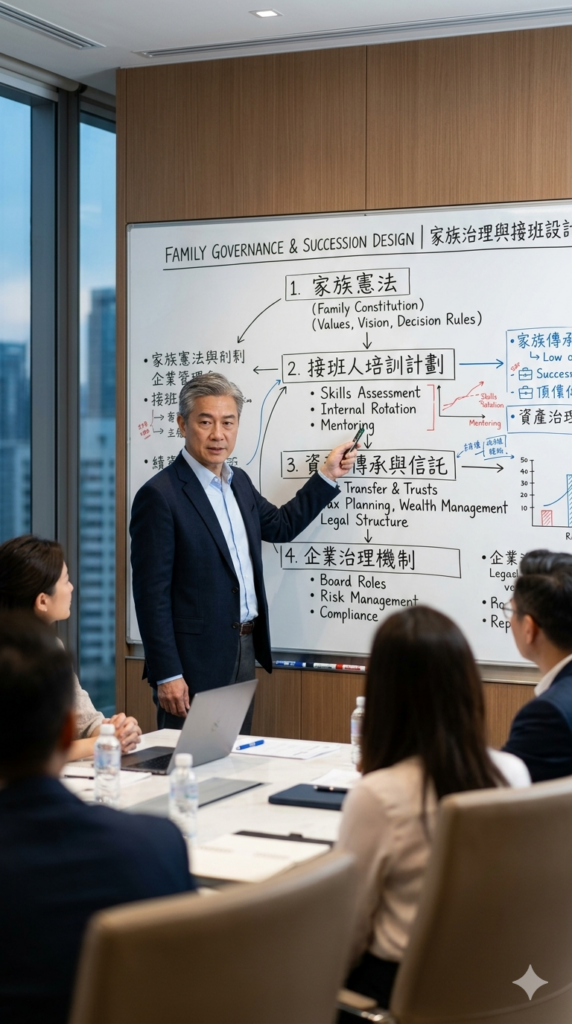
Family businesses play a vital role in global economies, especially in Asia where many enterprises are founded and nurtured by families. Yet, the sustainability of these businesses often hinges on two critical elements: family governance and succession planning.
The Importance of Family Governance
Family governance is about creating a framework that balances emotional ties with professional management. Family members are not only shareholders but also relatives, which can lead to conflicts if responsibilities and rights are unclear. Establishing family constitutions, shareholder agreements, and family councils helps ensure transparency and fairness. A strong governance structure protects both the enterprise and family unity, preventing disputes from undermining long-term growth.
Challenges in Succession Planning
Succession planning is often the most sensitive aspect of family governance. It is not simply about choosing a successor, but about designing a process that includes:
- Talent Development: Preparing the next generation by involving them in operations and decision-making.
- Gradual Power Transition: Transferring authority step by step to avoid sudden disruptions.
- Value Preservation: Ensuring that the family’s vision and values continue alongside financial and operational leadership.
Without clear succession planning, businesses risk instability when founders step down.
The Role of Professionalization
As family businesses grow, professionalization becomes essential. External managers and independent directors can bring expertise and objectivity, reducing reliance on family dynamics alone. Tools such as trusts and family offices also help separate wealth management from business operations, safeguarding both financial assets and corporate stability.
Conclusion
Family governance and succession planning are not one-time events but ongoing processes. By combining structure, culture, and professionalism, family businesses can achieve resilience across generations. This ensures that both the “family” and the “enterprise” thrive together, building a legacy of sustainable prosperity.